

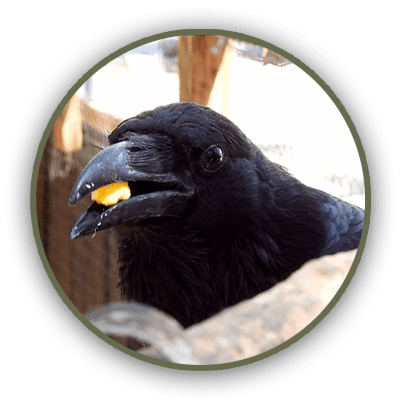
For nearly three decades, Kitty Pallesen has been the quiet guardian of Sky Valley's desert wildlife. Her refuge — perched on a private ranch in the Coachella Valley — has sheltered hundreds of indigenous animals: ravens, coyotes, tortoises, roadrunners, hawks, and songbirds. She has done this not for profit, not for recognition, but because she believes, with every fibre of her being, that these creatures deserve a fighting chance.
A Legacy Built on Love
Kitty's path to wildlife rescue was not accidental. Her mother — a 1947 college graduate who had dreamed of becoming a veterinarian but was turned away because of her gender — became her greatest teacher. That inherited passion for animal care became the foundation of everything Kitty built in the desert. Over 28 years, she transformed a patch of Sky Valley land into a living sanctuary: a tortoise refuge, an aviary, and acres of natural habitat where creatures of all sizes could live in harmony.
Visitors who have made the journey to her ranch describe it as transformative. Children who have never seen a wild tortoise up close leave with a reverence for the desert they carry for the rest of their lives. School groups from the Coachella Valley Unified School District have walked her trails and come away understanding, perhaps for the first time, what it means to share a planet with other species. Jane Goodall herself has spoken to the truth Kitty lives by: "You cannot get through a single day without having an impact on the world around you."
When the Law Came Knocking
But Kitty's story is not only one of beauty and dedication. It is also a story about what happens when a woman who has devoted her life to protecting animals finds herself in the crosshairs of the very regulatory system that is supposed to do the same thing.
California's wildlife laws are among the most complex in the nation. The California Department of Fish and Wildlife (CDFW) oversees a dense web of permits, regulations, and enforcement actions that govern who may legally care for wild animals and under what conditions. For professional wildlife rehabilitators operating within the system, these rules provide structure. But for independent sanctuary operators — particularly those who have been doing the work long before formal permitting frameworks existed — the same rules can become a weapon.
Kitty's story peels back the curtain on the darker side of wildlife policy and enforcement, revealing the devastating consequences of a system that can, at its worst, punish the very people it should be protecting. The details of her legal ordeal — the charges, the hearings, the toll it took — are documented in the documentary film "Give 'em Hell Kitty," which follows her fight with unflinching honesty.
"They tried to bind her with chains of blame — but Kitty, the wild one, could not be tamed."
— Lynn Drewett, "Keeper of The Desert Wings" (2025)
The Poem That Said What Law Could Not
In 2025, poet Lynn Drewett captured the essence of Kitty's ordeal in verse. "Keeper of The Desert Wings" tells of a woman who built a sanctuary not of stone but of soul — and of the moment the state moved to silence it. "They silenced her flock in the name of the state / A heartbreak so sharp it shattered her fate." The poem circulated widely among wildlife advocates and became, for many, a rallying cry.
What makes Kitty's case so resonant is not just the personal injustice — it is what it reveals about a broader systemic failure. Across the United States, independent wildlife rehabilitators and sanctuary operators face an increasingly hostile regulatory environment. Permit requirements, inspection regimes, and enforcement actions have intensified, often targeting small, underfunded operations run by passionate individuals rather than the large commercial enterprises that have the legal resources to navigate the bureaucracy.
The Broader Crisis in Wildlife Rehabilitation
The United States has no federal framework specifically governing wildlife rehabilitation. Instead, the patchwork of state laws — each with its own permit categories, species restrictions, and enforcement mechanisms — creates a system that is inconsistent, difficult to navigate, and frequently punitive toward the people doing the most important work on the ground.
In California alone, the number of licensed wildlife rehabilitators has declined significantly over the past decade, even as the need for their services has grown. Habitat loss, climate change, and urban encroachment are pushing more animals into contact with humans — and into crisis. The animals that survive those encounters often do so because of people like Kitty: individuals who act first and ask permission later, because the alternative is watching an animal die.
Critics of the current enforcement approach argue that regulators too often treat independent sanctuary operators as threats to be managed rather than partners to be supported. The result is a chilling effect: experienced rehabilitators quietly stop taking in animals rather than risk prosecution, and the knowledge they have accumulated over decades walks out the door with them.
What Kitty's Fight Means for All of Us
Kitty Pallesen did not back down. The chains, as the poem says, melted away. She is still in Sky Valley. The refuge is still open. The ravens still fly. And the visitors who make the drive up into the desert hills still leave changed.
But her story is a warning. The systems we build to protect wildlife can, if left unchecked, become instruments of harm — not to the animals, but to the people who give their lives to saving them. If we want a future where desert tortoises have sanctuaries, where injured ravens are nursed back to health, where children can look a wild animal in the eye and feel the weight of that responsibility — then we need to fight for the people who make that possible.
Kitty fought. She is still fighting. And she is not alone.